Contact lenses experience concept
Contact lenses is a commodity that people have to be prescribed by an eyecare practitioner. When customers look for contact lenses, they often try to locate a specifically prescribed brand of product rather than shopping around to see which one suit them better. Because of this nature, contact lenses customers are driven by two factors; Price and convenience.
The vision for Clearly’s contact lenses experience focuses on mobile experience as mobile traffic has surpassed that of any other devices as well as for the convenience factor of mobile device being part of people’s daily lives.
Process

Objective
To create a service that provides a dependable, flexible and delightful contact lens buying experience that considers contact lenses’ wearer’s needs, habits, and health.
Market landscape & Business Intelligence
Approximately 70% of the revenue is generated by contact lenses business.
Contact lenses market is competitive with price wars resulting in low margins.
Reorder functionality within MyAccount attributes to 24% of the overall contact lenses sale.
Contacts wearers have to be prescribed specific contact lens product.
Biggest contact lenses players are 1800 Contacts, Specsavers, Vision direct, Costco Optical, and Walmart Optical
The differentiator
All points of customer contact, even the smallest, are thoughtfully humanized, simplified, and done better than competitors.
All hands at Clearly think ‘customer first’, which will define everything we make, say, and do in customer interactions.
Authentic and demonstrated dedication to customers’ health and general well-being.
The leanest customer experience in the industry.
Questions & assumptions
Actively engaging with customers through user testing and customer interviews to validate assumptions.
Question 1. When considering contact lens purchase, do customers think in terms of the number of boxes or are they thinking about the length of their supply?
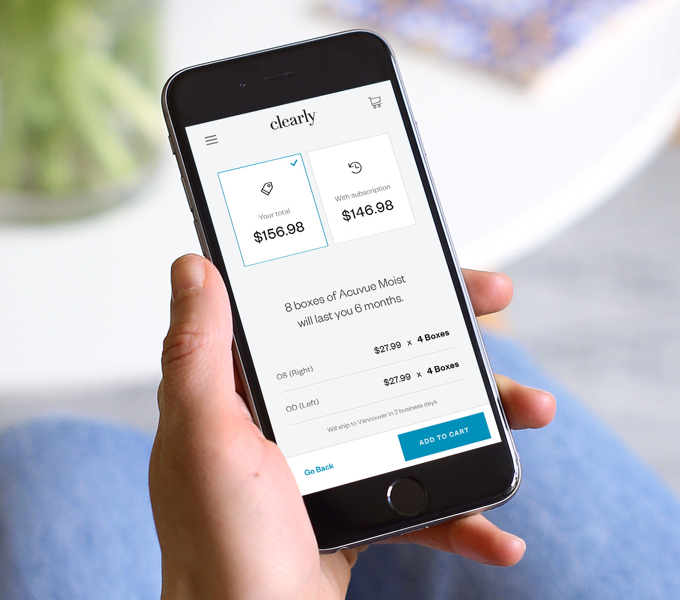
Assumption: Customers think in terms of supply duration, not boxes per eye. The full cognitive burden of calculation is on the customer, which is a friction point that could be negatively impacting our Add to Cart rate.
Question 2. If cost is what gets new customers in the door, what keeps them coming back?
Assumption: Cost will not keep customers coming back. Providing excellent customer service and lean, thoughtful UX (holistically across all touch points and channels) will keep us relevant and allow us to build a strong rapport with customers.
Question 3. How can we train our customers to stick to a recommended wear schedule?
Assumption: With eye health being central to UX, and a subscription model that’s transparent about how it calculates, customers will trust and understand that our recommendations are done in their best interest.
Validation - Customer interview
Method: 1 on 1 interview @ Robson storefront
Participants: 11 contact lens users
Number of questions: 6
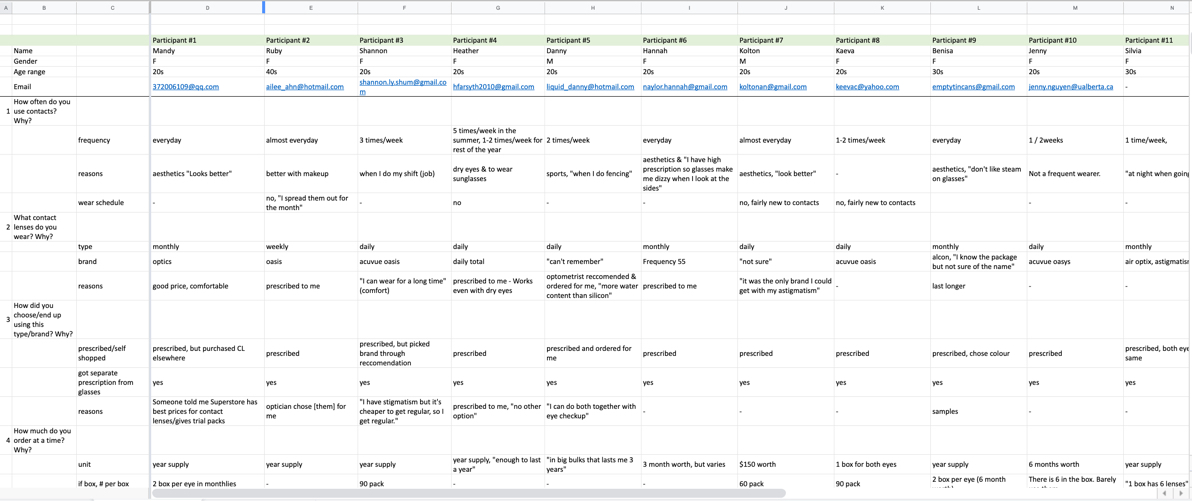
Process: Document their answers and feedback and find patterns/ Summarize and highlight key insights based on initial goal.
Learnings:
All participants would sacrifice cost for convenience (and also for loyalty)
Majority rely on their optometrists for the right brand/type (first place of purchase). The reasons for coming back to optometrists is convenience. Doctors know customer’s prescription and most of the times, have it readily available to purchase right on the spot. Some doctors send reminder emails for refills or regular eye checkup.
All customers know what brand of contact lenses they wear - most recognized by the box rather than the name.
Drivers for shopping online for contact lenses is cost & convenience
Majority do not have a wear schedule; they extend their wear schedules even though it is a “daily disposable contacts”.
Summary: Even though people are sensitive to prices, they are willing to come to the same optometrist / eye care practitioner for convenience. People know their brand of contact lenses, therefore they will locate their product and buy - making the shopping process short and simpler. People are not as conscious about their eye health as they are extending their recommended wear schedule.
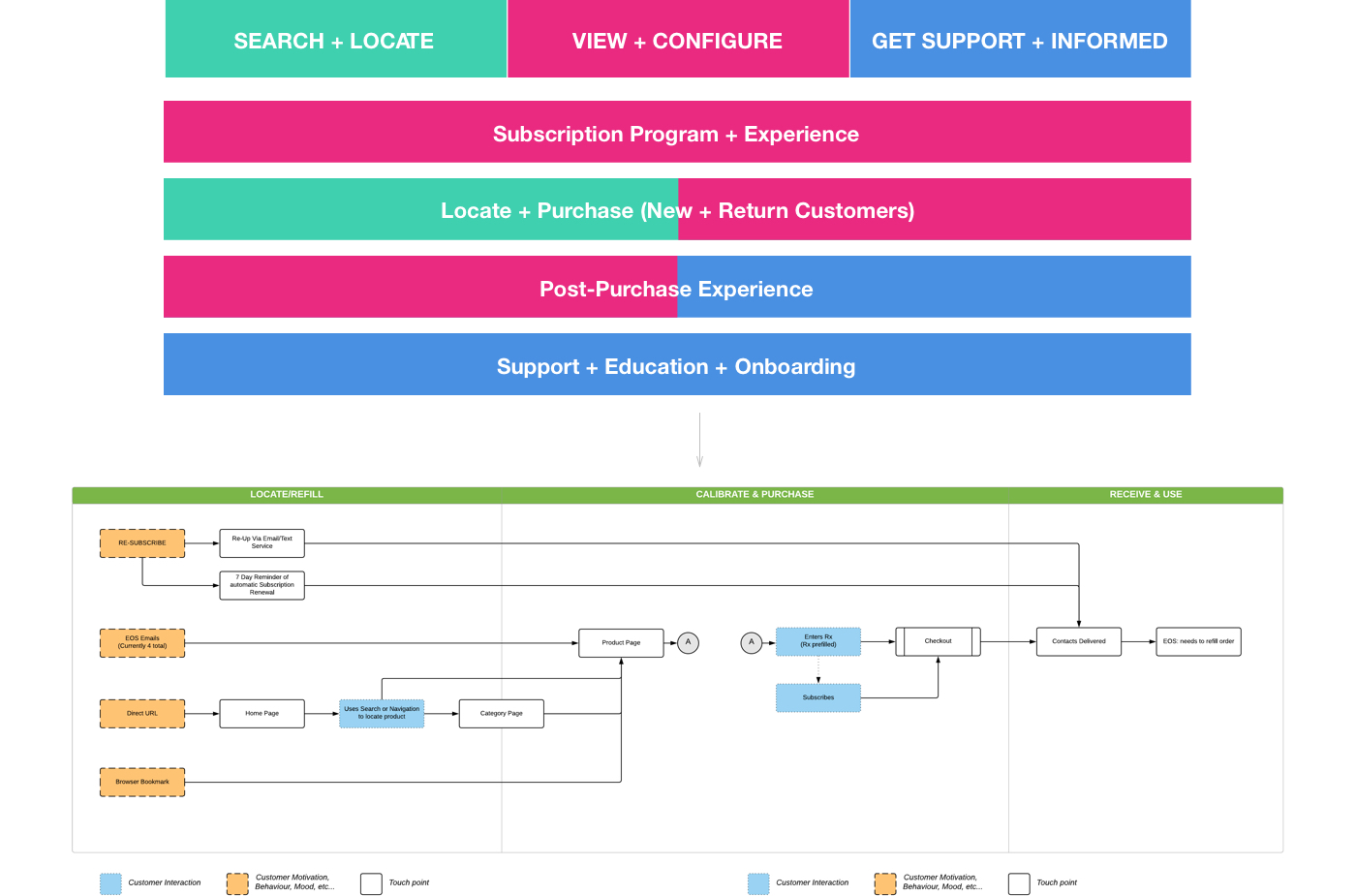
Customer Experience: Epics and Journeys
3 epics of customer journey with subsequent products to support each epic
User stories & Design
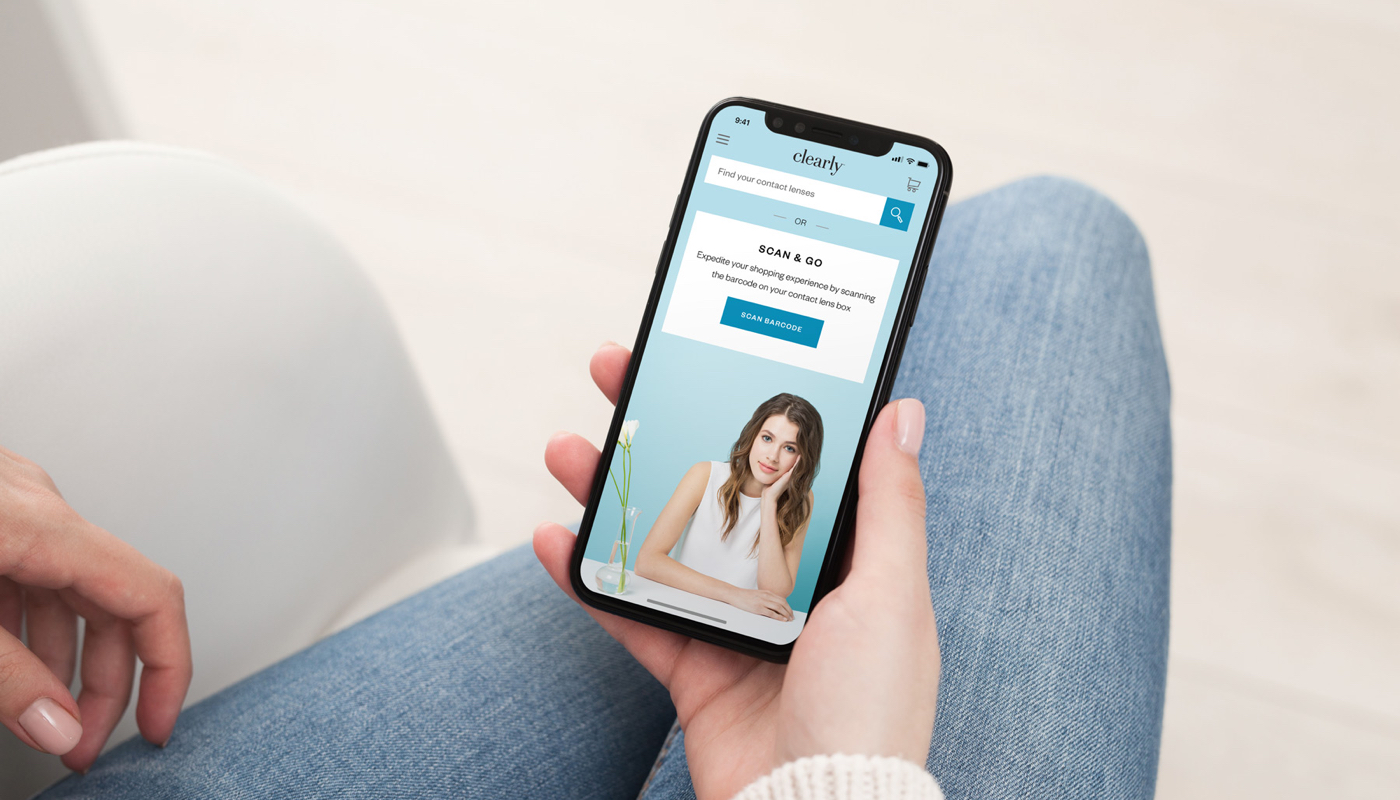
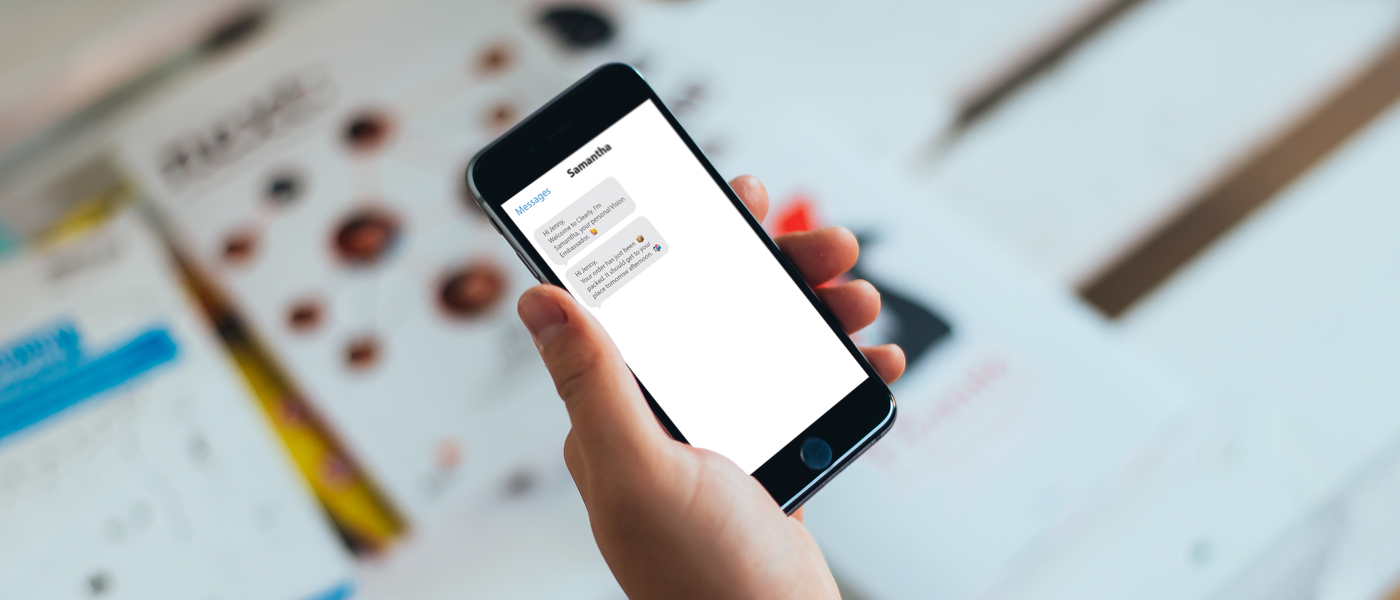
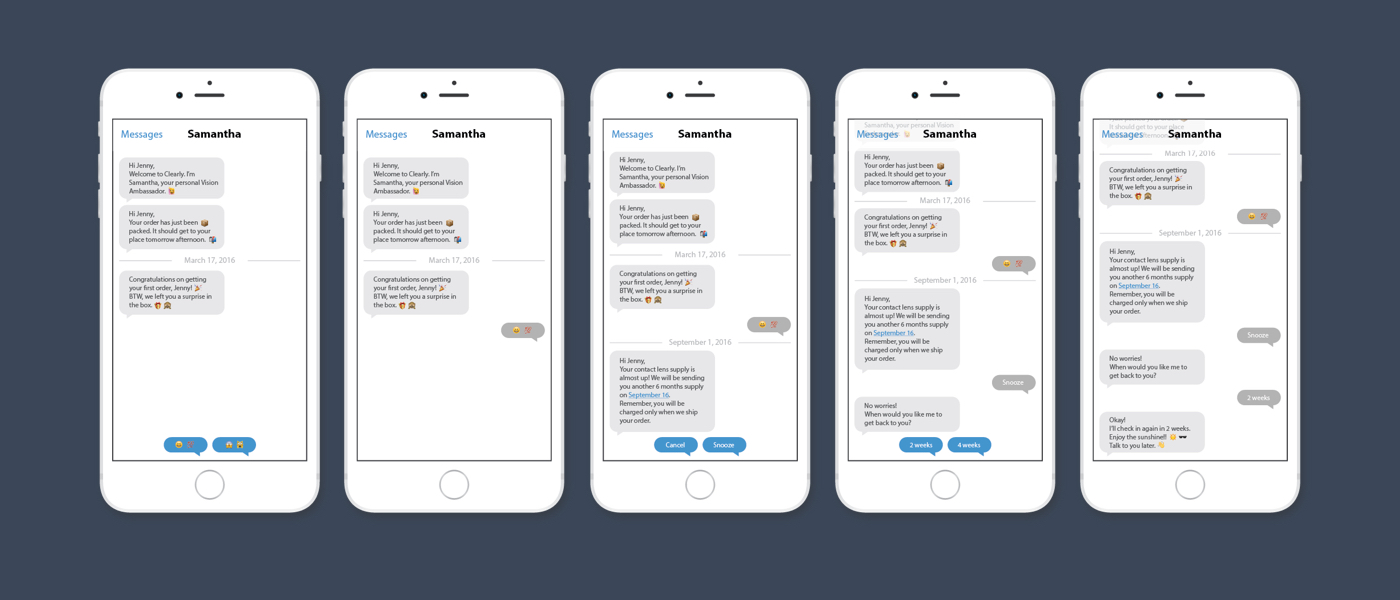
The experience is focused on mobile by leveraging mobile and its SMS capabilities to regularly communicate with customers.
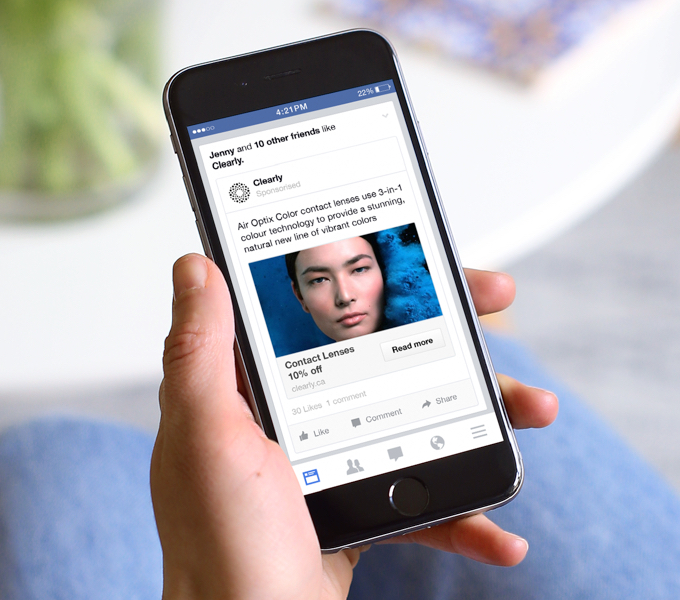
- Comes across a social ad with a promotion.
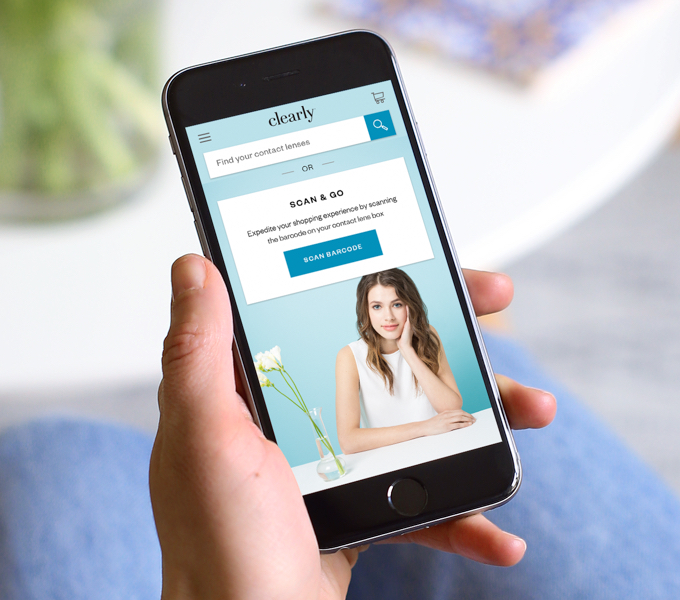
- Goes to Clearly contact lens site.
- Can locate either by searching for product name or by scanning the barcode.
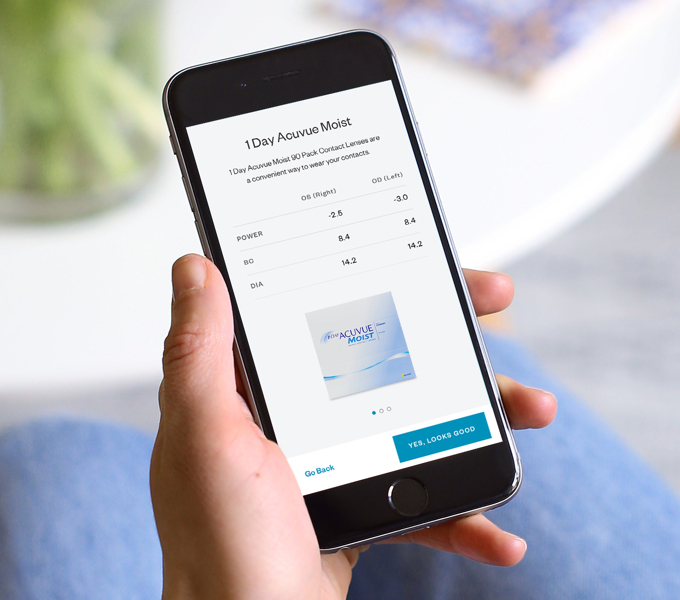
- Locates the product with all its prescription information prefilled.
- Checkout or subscribe to the product.
- If select subscribe, asked to fill out wear frequency/week and how often they want to be delivered.
- Checks overview page. Option to add the appropriate solution to their purchase.
- Checks out with a delivery date.
- Gets SMS notification with updates on the status of the shipment.
- Gets SMS notification 2 weeks prior to the refill date. Can choose to continue with the order or hold until later.